

34·
5 days agoClient side support for a tipping link (Koffee, Patreon, crypto wallet, whatever the user’s choice is) that is built in to the UI would go a long way.

Client side support for a tipping link (Koffee, Patreon, crypto wallet, whatever the user’s choice is) that is built in to the UI would go a long way.

I have suggested a couple of times now that ActivityPub should implement an encryption layer for user authentication of requests and pings. It already has a system for instances vauching for each other. The situation is that users of “walled garden” instances in ActivityPub lack means of interfacing with public facing instances that doesnt leave the network open for scraping. I believe a pivot towards default registered users only content service built on encrypted handshakes, with the ability for servers to opt-in to serving content to unregistered users would make the whole network much more robust and less dependent on third party contingencies like CloudFlare.
Then again, maybe I should just be looking for a different network, I’m sure there are services in the blockchain/cryptosphere that take that approach, I just would rather participate in a network built on commons rather than financialization at it’s core. Where is the protocol doing both hardened network and distributed volunteer instances?
How is Gemini fairing in the existing bot landscape? Usenet?
Damn, how was this not big headline news?
And of course in Cyberpunk the ttrpg setting much of the o0en internet was rendered useless by self replicating AI malware hijacking storage, processing, and bandwidth due to a zero day exploit discovered by one egomaniacal hacker.
Yes, the idea of the physical ID card they discuss makes a lot of sense, however that has the problem of associating your device with your ID.
When it gets to cloud hosting the personal data and an intermediary validation service that’s where I get even more skeptical.
I have a vague idea about a system that uses a time and topology based encryption where a person’s private information is encrypted and can generate a public key pair that will only match within a set time frame so that the data is held on government servers fully encrypted and when the user issues a “consent” that consent enables validation of a check-sum when both the user and the website provide the public keys without directly querying the government database. So basically the website is issued a public key by the server that works for all citizens that are above an age limit, and the users are sent private keys from their government data store whenever new data is encrypted. If the user’s age is above the limit, the user’s key will validate the age check, and because the key changes rapidly over time it cant be used to correlate the individual across multiple validation checks.
Users can host a version of the data store locally, that can be validated as matching the government store using the query “is there a match to the shape of this encrypted data” rather than querying a specific citizen info store (this is blockchain tech, but can be centralized). This could be used to fight against identity theft, which is certain to be a crime that spikes with any digital ID system. Thats not the most clear but I think you’ll get the gist, no intermediaries necessary.
All this said, in the US there are private services that validate physical ID cards using the codes on the back or a scan of a photo of the ID, so clearly the information has already been made available to private industry from the government through some channel. So that might be even worse than proposed systems in other nations already, I dont know.
A pretty good system, the crucial implementation being a robust consent management system for data access, and Metadata tracking to make sure the account identifier isn’t being used behind the scenes as a de-facto tracker by the public sector.
To me the risk of Digital ID is two fold, one it gives the government a centralized means of tracking individual behavior and thereby crushing dissent (from a Social Credit System, to straight up Russian style gulagging the opposition). On the flip side it gives private sector actors a central immutable identifiers to associate behavior with that can’t be erased by deleting or abandoning an account.
Age Verification is the point where these two concerns are merging into one. Abolishing online anonymity is tantamount to universal surveillance by both the state and private actors, setting up a system of automated persecution tyrants have dreamed of for ages but hasn’t been possible until today with Machine Learning making mass data processing automation both viable and feasible.
Fascist population control and the “final solution” weren’t possible in the way they were implemented until IBM sold the Germans early tabulating machines / computers. ML is the next phase of that same arc of development.
Use of Digital ID to log internet activity is what makes individual data streams continuous, contiguous, and compileable by default.
The consequences are clear, the question is what we can do to prevent it from happening.
This is the biggest struggle of the decade at least. It needs to be forced on every politician as an issue to make statements on. No votes for Digital ID supporters.
I’m not familiar with a temp and flow two handle mixer for a sink faucet. That could work well if the temp valve is full bore.
Single handle faucets dont replicate temps, you have to guess approximate temp each time and they are almost always center biased.
zheres your standard two tap mixer faucet:
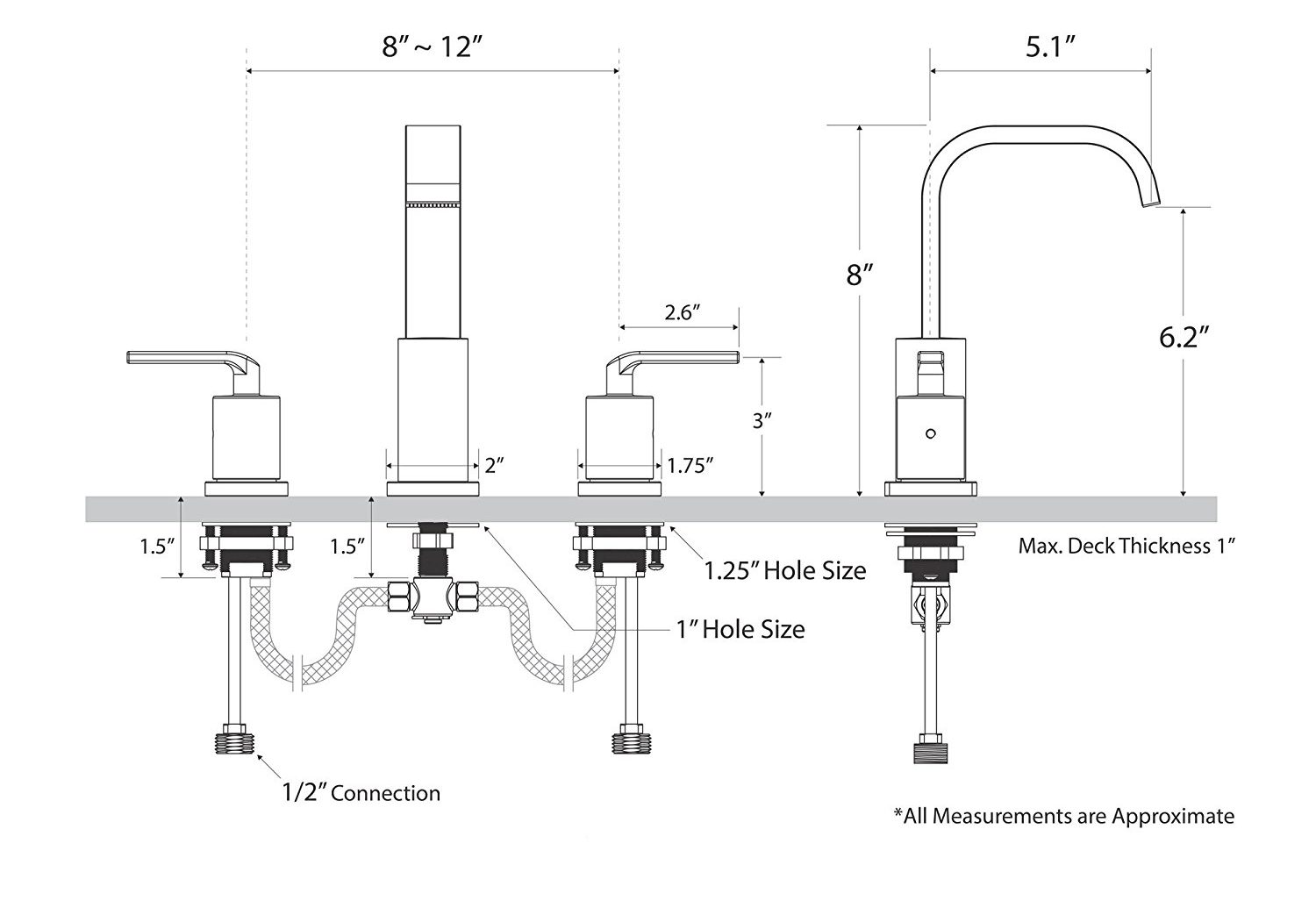
At both taps full open you have full flow/pressure from both the hot water and cold water supply only restricted by the valve full open orifice.
Now add an additional valve to the mixed outlet of the faucet with both hot and cold feeding into the line that runs into it. If the valve is sized to accommodate the full flow from both valves feeding into it, the full combined pressure/flow from both cold mains and hot supply is available.
Also, once you set the temperature you like by turning the temp taps, that temp will be available to you at any flow rate on demand. Nothing you do to the mixed valve will change the temperature of the flow. This is especially useful if your hot temperature is very hot, you can have nice warm water to wash your hands every time without worrying you might scald yourself.
they set the relative flow/pressure of respectively hot and cold water. The tap sets the total flow from minimum to maximum available based on the pressure supplied from.thenother two, allowing the selected hot/cold ratio to be preserved between on/off cycle, while also allowing for just a small stream of water when you need it, or a full flow of water when you need to fill a vessel or blast a dish.
Because sometimes you want full cold, sometimes you want full hot. Yes you could use a three way valve but you’d generally lose maximum water pressure.
Isn’t this thread about sinks?
single handles are all well and good, but I’d prefer a hot knob, a cold knob, and a flow knob. I’ve never been clear why this isn’t done, I suppose its probably cost. Maybe there is some wear and tare reason?
Yes, closing your sinuses is a natural reflex response for humans, and people have greater or lesser at will control over it.
The nose holding for swimming is more about how strong that sinus closure is and endurance. People with larger sinus openings have a more difficult time keeping them closed and resisting pressure like water entering from jumping into a pool. Also some people have a hard time keeping them closed for any prolonged period.
In other words, you just have totally ripped sinuses breh.
hahahaha, what a mess.
It is nitpicking, but in legal terms you could say he has shares in the company but not stocks. Stocks refers specifically to publicly traded shares, that is to say shares sold on a stock market. Shares is the more broad term as it can refer not only to stocks but also private equity units of various types. Valve is a Limited Liability Corporation, or LLC, which have Membership Units as the type of shares held by owners, which differs from stocks both in terms of tax treatment and limitations on how they can be transacted.
Offer him the option to transition Valve to a workers cooperative. Boom, he would no longer be a billionaire.
OK, you might be on to something there.

Nice, I dont use Peertube as often as I’d like because I haven’t found the right creators for me. Good to know they already have this, should be an example to the rest of the platforms