

1·
26 days agoMy understanding is that it’s a difficult feature to support and they can’t guarantee it works well. That’s the only explanation I’ve ever seen, cause to me it’s almost critical for working on a laptop.
My understanding is that it’s a difficult feature to support and they can’t guarantee it works well. That’s the only explanation I’ve ever seen, cause to me it’s almost critical for working on a laptop.
I dont get why hibernate isn’t a more popular feature, I use it extensively as I hate having to set everything back up on each restart.
Its also one of my biggest issues with using Linux as it’s usually broken there.
Yeah that’s right, seems my link didn’t populate right.
I think you’re missing the point. No LLM can do math, most humans can. No LLM can learn new information, all humans can and do (maybe to varying degrees, but still).
AMD just to clarify by not able to do math. I mean that there is a lack of understanding in how numbers work where combining numbers or values outside of the training data can easily trip them up. Since it’s prediction based, exponents/tri functions/etc. will quickly produce errors when using large values.
Here’s an easy way we’re different, we can learn new things. LLMs are static models, it’s why they mention the cut off dates for learning for OpenAI models.
Another is that LLMs can’t do math. Deep Learning models are limited to their input domain. When asking an LLM to do math outside of its training data, it’s almost guaranteed to fail.
Yes, they are very impressive models, but they’re a long way from AGI.
Am I an idiot or isn’t the “pip vs conda vs poetry” line talking about package management?
I wouldn’t say worst, but maybe greatest difference in expectation vs reality - “My Time at Portia”.
Cutscenes and voice acting were janky. The UI felt like it was originally an MMO and feels odd for a single player game. The gameplay loop felt tedious and seemed to disrespect the player’s time.
Maybe I needed to give it more time, but for a game that I thought had generally good/great reviews, it wasn’t clicking for me.

I think that’s because in computer science most master/slave nomenclature comes from hardware with a command/control structure (still notable in things like Spark where the namenode/master node controls the data nodes).
GIT just took naming conventions from other existing design patterns (although I should probably look up sources to verify that assumption).
With things like wsl, conda has also become less useful. Anaconda is terrible software and the need for conda managed packages is mostly lost outside of the windows OS in my opinion.
Yeah they took that prediction an odd step too far.
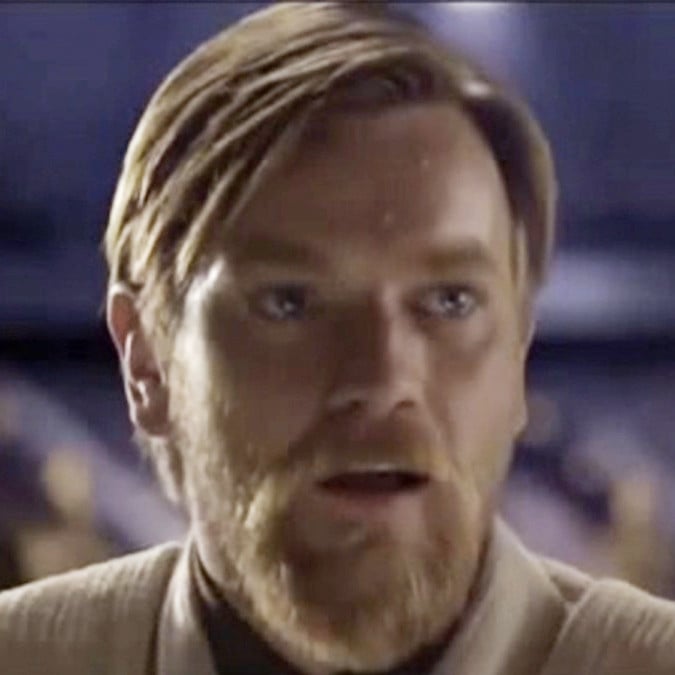
Another thing is the prequels made the world of star wars feel big enough to fill a galaxy. The sequels made the world of star wars feel small (at the end of the day they introduced like 4ish new characters that matter and like 2 new worlds).
And to defend my point, characters:
It’s hard to count Snoke, the Knights only show for a hot second, Storm trooper lady maybe, Admiral Holdo maybe, oh and Hux doesn’t deserve mention.
Planets:
I did look it up and there are a few more. Forgot Jakku isn’t just a part of tatooine. There is another desert planet apparently, there are also a couple planets the rebels set up at that are only pop up for a few minutes. Luke’s island is on a planet, but not sure that really counts. Starkiller base is listed as a planet, but that’s pretty much deaths tar 2.0.
I knew it was bad news the minute they did that whole “can you hear me bit” at the beginning between Hux and Poe. It was clearly them forcing marvel level humor into star wars and it felt sooo stupid.
It’s like the exact opposite of Han on the intercom in the first ( or fourth) movie. There Han knows he’s messed up and tries to play it up, but the bluff is immediately called. The humor is in the ridiculousness of the attempt. With Hux, it’s played the opposite and it just raises more questions about how Hux and the First Order ever became a serious threat.
Also, the prequels had fun and interesting world building. Look at games like battlefront and fallen order or all the new aliens we were introduced to.
The prequels made star wars feel larger than the original trilogy, the Sequels made the world feel smaller. No new alien race that plays a big role, no new worlds of interest (maybe the red salt planet, but it’s a barren wasteland), no new ships or technology.
Unlike the prequels (spanning decades, wars, and planets) the Sequels don’t have anything to build off of to save them.
Maybe not the same thing as FPS chess, but a great chess rougelike with guns is https://store.steampowered.com/app/1972440/Shotgun_King_The_Final_Checkmate/
No they’ve used them on other sets, although I think primarily on sets targeted towards girls (this frozen set for example https://www.lego.com/en-us/product/elsa-s-ice-palace-43244)
Not sure if this set would be an indication that they are looking to use the more broadly.
I really do wonder what might have been if it released before, rather than after, The Last Jedi. I only ended up seeing it because I got to go to a free screening with the new chewie, and it was a fun movie. I think at least on par with the prequels, but certainly more felt more “star wars” then the Sequels.
I liked that they (the prequels) expanded the world of star wars and felt fun and fantastical (as I imagine the original triology felt when it came out). The Sequels tried to be too dark and moody in my opinion.
He did do a great job with what they gave him. He’s the only reason the film is bearable, and would have loved to see a more serious and earnest take on that movie.

Yep, don’t be afraid to ask for help. The people at polling places are usually very nice and helpful!