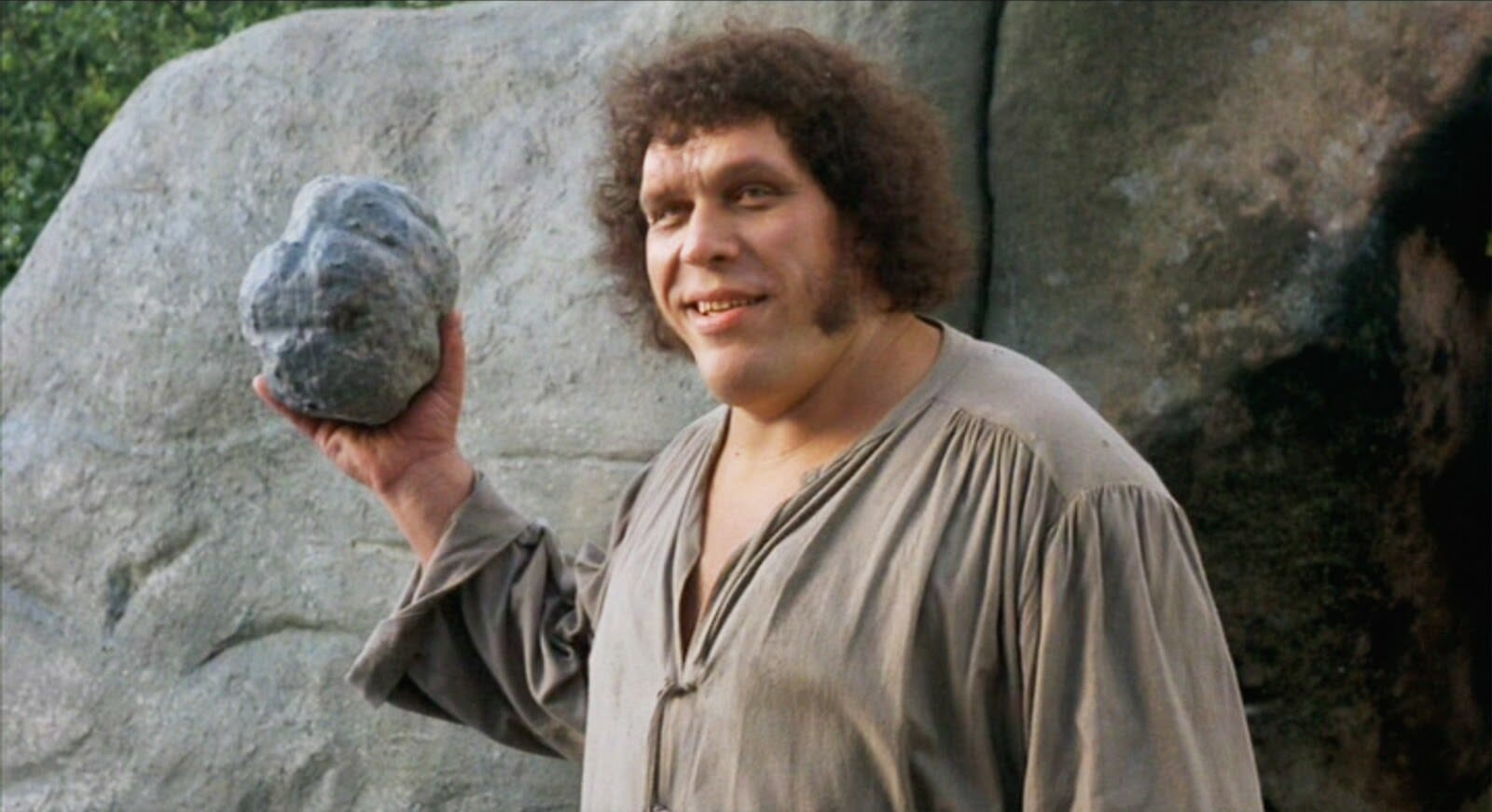
This meme hurts my brain
We’re memeing at levels never seen before.
This graph is missing “who cares, nothing matters”.
i think that falls under the “I don’t know” and “be not afraid lol” categories :P
I have to say that I think if a tree falls in the forest and nobody is around to hear it, it still makes a sound. I think this riddle / philosophical conundrum is solved.
Why? Sound is air being disturbed. The air is still disturbed regardless of if anyone heard the effect.
yeah but human beings are so arrogant they want to believe that nothing exists without them perceiving it.
people like to make an argument out of it, but what they don’t acknowledge is the arrogance of the idea nothing exists outside your perception, which basically makes you into a god-like figure it your own reality.
and nobody likes to talk about how social media has warped so many people’s brains into this way of thinking, that previously they had no access to because they were boxed in but a reality that didn’t let them sit on their ass and think delusional thoughts hours a day. Used to be only weirdo philosophy people did that, now it’s what your average person does with their social media feed.
I definitely know people who struggle with object permanence
Is sound air being disturbed or a brain interpreting vibrations in the air?
If you want to define sound like that, it’s equivalent to saying “if a tree falls in the forest and nobody is there to hear it, was it heard?”
It’s air being disturbed. Microphones have no brain. Deaf people can still feel bass vibrations caused by speakers disturbing the air. It’s a fully physical phenomenon that happens regardless of there being an observer.
Carve this in clay and put it in a cave. A thousand years after some societal collapse wipes out all digital data, this will be the only thing archaeologists will have from our time
Now playing Low - Plastic Cup
The author’s bias in this is rather… apparent lol
lol i thought so too at first. it’s clear there’s bell curves … the author says that higher IQ value leads to “reality is subjective and all is mental” worldview.
but then i thought, wait a moment, maybe the author is wise enough to recognize that higher IQ value is not always a good thing? maybe they actually don’t identify as being super-IQ? maybe they just want to live a chill live, and identify themselves somewhere in the middle of the curve? that would mean that the author does not actually think that all reality is just a thought construct …
For me the bias is not just in making idealist views look “higher IQ” but that they depict a person who just has the most basic self-evident views that are the most widespread and commonplace among people who don’t do philosophy at all (that there exists a material objective reality) as only possessing those views because they just got them from the television.
I think this is very common in philosophy, where people want to sound more interesting by positing very bizarre towers of metaphysics, which they claim are justified by some incredibly intellectual line of reasoning. They then paint normies as stupid for not believing that for not following their lengthy complex line of reasoning.
But quite often these lengthy complex lines of reasoning are just the author tricking themselves out of an obvious conclusion, by writing so much they obfuscate what is being talked about, so then it makes it look like their bizarre conclusions logically follow, when anyone who actually takes the time to parse that metaphysical tower will find it does not.
But they rely precisely on the fact that nobody will bother to parse it because it is too complicated, and then use the complexity as a sign of the “intellectualism” of the position.
I’ve always been a fan of defending the common man’s views by analyzing arguments against it, going over the tower of metaphysics and seeing if their conclusions really do follow and prove the common man wrong. I’ve never found any argument that necessitates they are wrong. Sometimes the arguments are strong enough such that you have to make some additional clarifications, but that only serves to better flesh out the position rather than to dismantle it, so there is nothing inherently “stupid” about the common position.
yeah i get what you mean. a whole lot of academic writing is unnecessarily complex, which hurts clarity (and often obfuscates poor reasoning). (there’s a meme about this, i saw it a while ago, where somebody wrote a long paragraph full of complicated words, which could have been said with a very simple four-word sentence. i’ve been looking for that meme ever since, in case somebody happens to have saved it.)
anyways, i get what you mean. it’s so obvious to say that “reality exists” and that the objects around us “obviously are real”. but: there’s very good argument to the counter.
plato, for example, starts (iirc) by proposing the analogy of the river. imagine a river in front of your house. it carries water every day, but the water is fresh new water each day. it’s never the same water twice. but you would intuitively still recognize the river as the same river the next day, and the day after that. how come? if it is not made from the same material, it is not the same object, and should therefore not be the same?
plato resolves this by saying that the identity of the river (i.e. that what makes the river the river) is the shape of the landscape, not so much the physical water running in it. so, even if you have new water, it’s still the same river because it occupies the same location on the landscape, features the same bends and currents, etc.
now, what is real? is it the water, which is new each day, so you can never actually grasp it, because it changes while you are watching it; or is it the shape of the river, that which stays the same each day, that which provides a fixed notion for your mind that you can rely on? plato argues it’s the second one.
if two objects behave the same in every way (such as the water on the first day, and the water on the second day), then is it not the same object? so the single drop of water in the river does not even exist, because instead, the fact that there is water in the river is what you can actually say for sure, while you could in fact not distinguish one drop from another. but if you cannot distinguish one drop from another, does the individual drop even exist? or is it maybe just a fraction of a much larger mass of water that exists instead?
This is just an identity paradox, which the literature is full of them, and I find Plato’s solution way less convincing than the holistic solutions presented by people like Engels and Bohm.
The holistic solution is to argue that “identity” really doesn’t exist. There was never a “river” to begin with. Reality is just not actually divided up into autonomous objects. As Bohm argued, autonomous objects are human inventions. We create them because talking about reality as a whole, all at once, is not physically possible with our finite brains. We have to break it up into chunks to talk about it, and it is a mistake to confuse those chunks for reality, as if reality really contains autonomous objects moving around within it.
This was something Engels also cautioned against, outright rejecting identity for a simple reason. Imagine you say that this particular tree is represented by the variable A. Well, the moment you have said the tree is A, the tree has already changed a bit, it’s not what it was before, so it is now ¬A. If you say both A and ¬A are the same, that’s logically inconsistent. If you say the tree at the instantaneously later time should be considered a different variable B, then you no longer have a single “tree” but an infinite number of distinct objects, which contradicts with the notion of there being a single tree.
Indeed, he points to many other problems, such as the fact that you cannot meaningfully draw a concrete border for where the tree begins in space and where it ends, and where it begins in time (when it was “born”) and when it ends (when it dies). If you zoom in closely enough, the border between the “tree” and everything else becomes fuzzy and ill-defined, and its transition from a seed to a tree, and from a tree back to the earth, also is a gradual process without a well-defined boundary. Engels thus concludes that for formal logic to make sense at all, we intentionally have to ignore the real complexity of the world. If we say the tree is A, for example, we have to first ignore the flow of time and treat it completely static, and we have to not zoom in too closely so that we don’t notice the issue with ill-defined borders, so on and so forth.
The conclusion is, again, that objects don’t really exist. There is no “tree” or “river” that is a well-defined, static and unchanging object like the variables in formal logic, A or B or X or Z. This is where your Plato point breaks down. You replace the ill-defined river with another definition including an ill-defined “shape of the landscape,” which is also changing all the time just as much as the river does, with no singular and consistent “shape of the landscape,” and its very precise shape is impossible to rigorously define even at a single time instant.
Although, the philosopher Jocelyn Benoist, who does take a similar approach, disagrees with the framing of saying that “objects don’t exist,” because a philosophy that just says no thing exists can be linguistically confusing, so there should be some meaningful way to refer to the existence of real objects.
He makes a distinction between abstract objects, which do not exist in reality and are only a human construct part of our language, and real objects, which is when the linguistic symbol is employed in a Wittgensteinian language game, and thus is imbued with a context.
For example, Benoist would say that, if you are talking about a river in the abstract, it does not refer to anything real. But the word “river” serves as a socially constructed norm that can be used to judge reality to be something, and thus can be employed in a social setting. If I see a river and point to it, and say, “look at that river over there,” the river is now not just an abstract symbol, but it is a symbol pointing to something in a real world context, where people can really observe its glistening surface, dip their toes in it and feel its cold water, etc.
It’s meaningful to talk about real objects only if we are implicitly or explicitly imbuing that object (as a symbol) with a real-world context (where the symbol is employed to identify something in real-world experience) through the social practice of identification, which is the purpose of objects, to serve as a norm by which to judge reality by. The real object is thus the object + the context in which it is employed.
you missed the part where the meta physicians claim what they aren’t doing is metaphysics but science and logic, or something… and their inability to admit or understand that any logic of science is a metaphysical system…
history of philosophy is often a lot of finger pointing and posturing about ‘my philosophy isn’t metaphysics! it’s common sense!’
personally I’m more interested in the implications of idealism as a system in practice, but i’m a filthy pragmatist interested in the real world as it is, not as it ought to be.
You missed the part where metaphysicians claim that what they are doing isn’t metaphysics at all, but science and logic, or something along those lines.
No, I didn’t. I agree with that. I have literally written an entire book criticizing how people conflate the mathematical models of modern physics with philosophical interpretations of those models, and then pretend their metaphysics is not philosophy but something “proved by the empirical evidence.”
The book was motivated precisely by the question I raised in my previous comment: does the common man’s position really have to be abandoned?
Philosophers, including physicists who write philosophy, very commonly point to modern physics as establishing the need to abandon certain common worldviews and adopt a new metaphysics. But they often present this not as metaphysics, but as something directly established by empirical reality, such that questioning it is treated as equivalent to denying science.
One example is the dominant interpretation of special relativity, which claims that space and time are ontologically relative. We can experimentally verify that clocks drift from one another exactly as the mathematics predicts, such as when two airplanes fly in opposite directions and meet again. The conclusion is then presented as empirically proven: space and time themselves must be relative.
But John Bell pointed out in “How to Teach Special Relativity” that the same mathematics can be given a different philosophical interpretation while preserving the same empirical predictions.
You can instead assume that spacetime is absolute, while objects in motion undergo physical effects that cause moving clocks to slow and rulers in the direction of motion to contract. The measurements of rods and clocks would then be emergent properties produced by absolute space and time plus these physical effects. The mathematics remains the same, but its ontological interpretation changes.
If physicists object that such an absolute rest frame could never be experimentally identified, that does not prove it does not exist. It means only that its existence is empirically undetermined. At that point, the usual response is Occam’s razor: if we cannot directly detect such a frame, we should eliminate it from our ontology.
My point is not that this is wrong. It may be a perfectly reasonable philosophical choice. My point is that Occam’s razor is a philosophical argument.
You have not empirically proven that space and time are relative. You have shown that relativity follows from the mathematics given a particular interpretation of what the mathematics represents. Choosing that interpretation over another requires an additional philosophical argument. If there were motivation to make an argument in response (which is a whole other topic, but I argue one can mount a strong counterargument), then it would lead to a philosophical debate, and that debate could not be settled empirically.
This is the broader point I am making: the same mathematics can be compatible with multiple ontological interpretations. Empirical evidence can constrain those interpretations, but it does not necessarily determine them uniquely.
So, if you are an extremely conservative skeptic who refuses to abandon the common man’s worldview unless doing so is strictly necessary, you can always ask whether the new worldview actually follows necessarily from the mathematics and empirical evidence.
Often, it doesn’t. The physical evidence motivates the metaphysical debate, but it does not wholly determine its outcome.
The book was motivated precisely by the question I raised in my previous comment: does the common man’s position really have to be abandoned?
no, i don’t think that the “common man’s position has to be abandoned”. In fact, i think that people should be allowed to believe that the earth is flat. For 99% of people, that is what they can observe in their daily lives, and it’s the simplest model that “gets the job done” (i.e. navigates the person through their daily lifes). You only need to know that the earth is a globe if you’re doing international trade, geopolitics, or spaceflight. For every other application, it does not matter.
If physicists object that such an absolute rest frame could never be experimentally identified, that does not prove it does not exist. It means only that its existence is empirically undetermined.
You are right here.
At that point, the usual response is Occam’s razor: if we cannot directly detect such a frame, we should eliminate it from our ontology. … My point is not that this is wrong. It may be a perfectly reasonable philosophical choice. My point is that Occam’s razor is a philosophical argument.
The thing is that Occam’s razor is not just a philosophical argument. It comes from practical thinking.
The thing is, our brains are a computer too. So they need software, programming. Now, if you want to write software, you have to keep to some meaningful physical constraints, such as: Be simple, don’t waste computing resources, be energy-efficient, make the code run fast. These circumstances urge you to use the simplest possible model (of how the physical world works) that works for your practical applications.
So, occam’s razor really comes from the urge to optimize the software that runs in our brains for simplicity and speed. It does not come for no reason. And that is why indeed, yes, occam’s razor follows from being pragmatic.
For 99% of people, that is what they can observe in their daily lives, and it’s the simplest model that “gets the job done”
Well, for me, 99% is not good enough. I want 100% compatibility, not just with what I observe in my day-to-day life, but with all empirical evidence ever gathered and recorded by humanity.
The thing is that Occam’s razor is not just a philosophical argument. It comes from practical thinking. The thing is, our brains are a computer too. So they need software…
You’re explaining the process you believe leads to people employing Occam’s razor. That doesn’t justify the usage of the razor. This is basically an is/ought thing. You describing an “is” (the process that causes it) doesn’t get you to an “ought” (that the razor should be logically employed in all cases).
Also, as I said, one can mount a strong argument against Occam’s razor in this case.
Particularly, special relativity without assuming an absolute rest frame is not logically compatible with non-local effects, yet quantum mechanics is non-local. The physicists Frauchiger and Renner directly proved in a paper published in Nature Communications that this leads to a time-paradox without specifying an absolute time-ordering of events.
Well, they argued there are two other ways to avoid the time-paradox as well. One is to just claim quantum mechanics is wrong, which I don’t think it’s wrong. The other is to posit that there is a multiverse, because maybe two observers describe the same system in contradictory and logically incompatible ways because they are actually describing two different branches of the multiverse.
However, Jeffrey Bub in his paper “Two Dogmas’ Redux” shows mathematically that this doesn’t work, because the paradox can be proved to be completely confined to a single branch of the wavefunction, so it cannot be resolved by considering higher branches. While Frauchiger and Renner posit that the multiverse may solve the problem in their paper (and indeed say this in many interviews), Bub proved they are wrong, and it is still inconsistent.
The only logically consistent conclusion, then, is that there is an absolute time-ordering.
When I said I could mount a strong argument against it, my point was not merely that I’d throw out Occam’s razor in this case. If I offer no meaningful alternative, then it doesn’t really strengthen my case that one can mount a reasonable defense.
But my point is stronger than that. I am pitting two different assumptions against one another: (1) Occam’s razor, and (2) the view that your worldview should be logically consistent. I am pointing out that applying #1 in this case violates #2, and that I believe #2 is more important here.
Can I prove it’s more important? No, but I think I could convince a lot of people who were willing to listen.
reality is the opinion of the Republic of Estonia 🇪🇪🇪🇪🇪🇪🫡
Really. Can none of these people check Greco-Roman philosophy debates about this very question.
no, because that’s gay.
and big strong straight men never read history, they think their deep original profound thoughts that stand for all time by themselves, in their bedroom, after masturbating.
deep original profound thoughts that stand for all time after masturbating
they stand for all time because this pattern keeps repeating over and over again
Chat, what coordinate system am I witnessing in this meme?
coordinate systems aren’t real. silly.
you should use your IM-AG-IN-A-TION! WOOOO! YAY!
Nothing like ADHD existentialism
“You see, i already put myself as the chad and you as the virgin.”
I wish reality was subjective, because then I could imagine it isn’t what it is right now and it wouldn’t be.
Reality is ultimately subjective but has a very heavy input bias from your material conditions.
In other words, you aren’t imagining your reality as being better than you are because you are insufficiently ignorant/delusional/disassociated.
Oh but it is.
One’s reality is entirely constructed from their interpretations.
The problem is that it’s a difficult state to remain in due to the ensnarement which comes from sharing reality with others. There’s a reason why ‘enlightened’ folk live on mountain tops.
Gravity applies no matter how far away you are.
Reality might be completely constructed from interpretation if there were no outside forces in play. But if your atoms are interacting with other atoms, you’re beholden to their rules.
Gravity applies no matter how far away you are.
ISS begs to differ
It surely doesn’t.
Source: it hasn’t flown off into space yet
yes, but you can’t convince people of that if they deny gravity is real.
the issue we have these days is gravity deniers get together and egg each other on in their delusions and create ever more elaborate theories to defend their denial of reality.
hell, many lemmy instances are created specifically for that purpose… because their theories often put that at odds with the general public.
“gravity doesn’t exist, we’re pulled down because the earth sucks”
i think this is just a metaphorical picture for depression
You are referring to some overarching reality, with a capital R, which is unknowable in its entirety. Contrast that to one’s own reality, which is both more and less real than the ‘outside world’. There are physical and social forces acting upon us all the time, but how we feel about them, when we even notice them, is what creates our internal reality. Which is vastly more important to our quality of life.
The rules can be bent.
It feels like you’re using the word reality as a duplicate of the phrase personal experience. In that case I would agree. You can absolutely choose how you feel about the things you perceive.
But no amount of choosing how you feel gets you to fly. And no amount of thinking you can fly will ever prove you to be right when you try and fail.
Though you can certainly feel like it’s worth trying again if you’re so choose.
Sorry, looking over my usage today I just realized I didn’t really address your statement at all, except to hand-wave it away. That seems to be happening more as I get older, sort of lose the thread and meander off to continue insisting on points nobody is really refuting. Probably just dementia or something.
But, yes, I certainly agree. There are some hard facts about the world that impress themselves upon us. Like there’s no amount of mentalizing that’s going to change physics. Hell, most spiritual traditions are largely about understanding and effectively coping with the things we can’t change.
I have read some interesting proposals by legit philosophers that argue the entire world is in fact created by the mind. Post doctorates and well learned spiritualists are often as equally skilled in logical arguments as they are in sophistry so many of their points can be hard to refute. Not necessarily convincing, but certainly compelling in a way that makes you reconsider the nature of reality.
Still, if someone is convinced they can fly, they might better try taking off from the ground first.
It’s a deliberate use of the word. Because people’s personal experience is their reality. Even among scientists, objective truth isn’t necessarily agreed upon, so aside from specific cases, it’s hard to use it as a guide post towards navigating life. Like you said, there are certainly hard facts in the world which impact us, but how we perceive and interpret these phenomena, how we grapple with theory of mind, creates our reality.
If that sounds a little too woo-woo then how about a more practical and fun example.
Your nose takes up 10 to 15% of your vision.
The capital R reality is that photons are bouncing off of your nose and entering your eye. Your eyes are seeing your nose. And yet, unless pointed out most of the time you don’t even notice that your vision is nose-less when, in fact, a nose is constantly in your field of vision.
Your mind has edited out the existence of your nose.
That’s not woo, that’s neurobiology. But so is the conscious construction of your reality. If you think about getting into a fight, your heart races, despite there being no real threat.
Now if a baseball suddenly hit you on the nose, you would be quite aware of capital R reality making it’s presence known upon you. But how you perceive why that happened and what it means determines the rest of your reality.
is there a written version of it? i really don’t like getting news/explanations of things through videos
It’s not news. And arguably this is the type of thing where you benefit from seeing the actual person talking because they have personal experience of what they are talking about. It’s more than just conveying words.
What a great video so far. I’m on break so I could only catch half of it but I am excited to see the rest when I get home.
Reminds me of the Buddhist practice of negating every label one has for themselves. What’s left? The ineffable.
Glad you like it! He’s from a related system (advaita/tantra) so if you know anything of Buddhism, he would sound familiar. He just has stripped away pretty much all of the cultural trappings and focuses purely on the core nondual philosophy and practice.
Also he’s what’s called a “householder”, tantra being primarily a “householder” tradition. Meaning, no sitting alone on mountaintops, it’s realization while engaged with the world.
Unfortunately it’s only just subjective enough for us to all constantly miscommunate
Trust not what the machine elves say, trust what the machine elves do
If they don’t make my cookies they can eff off.
elf off*
I’m 44 and this is deep
real shit
The bell curves curves have curves
I am aroused
Ask not for whom the bell curves curve, the bell curves curve for thee